
What Makes a Great Office Cleaning Company in Ohio?
What sets a great cleaning company apart? For many business owners, finding the right cleaning company for their office space can be a real challenge. Your office is a reflection of your company and professionalism. It is your first impression on potential clients and the place where your staff spends a large portion of their day. Bringing in the right company with the right know-how is how you get a custom-tailored cleaning that suits your needs. Let’s take a moment to learn what you should look for in a quality cleaning service.
Experienced Professionals

Ohio has a lot of great cleaning services available, and while we’d love you to do business with Vanguard Cleaning Systems, you need to be informed of what it takes to be considered a high-quality cleaning service. Professionalism goes far beyond maintaining a pleasant personality, so it’s important to understand that there is a lot more involved.
- Business registered with the state
- County business license
- Insurance (General Liability/Commercial Property/BOP)
- City Licensing
Reputation and Consistency
Most companies can produce references upon request, but it’s important to know how satisfied their other clients are to be sure you are picking the right fit. A cleaning service with a good reputation makes things easier on you in the long run. Have they been working with the same list of clients for years? Do their team members have a good working knowledge of how to fulfill multiple client needs?
Review sites such as Yelp and Google can be a great place to find direct, honest reviews. Don’t hesitate to call some of the other clients and ask them firsthand how happy they are with the results.
Scheduling can prove a hassle, and this becomes more of a problem if there are interruptions or incidents along the way. A good cleaning service has backup plans, helping to mitigate the strain on you if something should go awry. You should get the same result no matter which team members are cleaning.
Types of Service
Many cleaning companies have a range of services offered. Every business is unique, and any service you hire will need to handle both the mundane and specialized cleaning needed. Talk to your potential cleaners about what you would like to see accomplished. But take the time to hear their assessment and pay attention to areas they point out. This shows that they have a proactive mindset for your company’s needs.
Organized and Equipped

Knowing that your cleaning service is prepared for the level of cleaning you require is essential. In a post-COVID world, many people are more concerned about hygiene, especially in an office environment. Does your service have the equipment needed to maintain a good standard of health? Do they carry specialized equipment and cleaning products? Are they organized? Do they maintain a structured method for getting the job done?
These are all questions you can ask, and any cleaning service team member should feel comfortable answering. Well-organized and well-equipped cleaners tend to be efficient and detail-oriented.
Confidentiality
Often times you cleaning team may have access to sensitive areas of the office. You need to know you can trust them implicitly. Quality companies perform extensive background checks on their employees as well as a standard of conduct. Any cleaning company that deals with secure locations will have a policy regarding things like key cards and codes, who is allowed to have access to them, and what steps to take if those change. A great company will be open and direct in communicating with you regarding any security concerns or confidentiality specifications.
Whether it’s a healthcare facility that demands strict sanitation, or a warehouse needing dependable service providers, keep your buildings clean with Vanguard Cleaning Systems. We don’t just clean—we solve the issues that cause companies to switch cleaning providers in the first place. Join hundreds of Ohio businesses that trust Vanguard Cleaning Systems of Ohio franchisees for consistent, professional results.
How to Prevent Salt Damage on Commercial Floors
We tend to think of winter as a slower time of year. This is usually reflected by less foot traffic than we usually see, but that doesn’t mean your flooring is in any less danger. Commercial flooring can be pretty hardy, but even then, it can be damaged by rock salt and wet snow that get drug inside. A welcome mat in front of the door isn’t going to stop this damage. So let’s talk about how to get the most out of your commercial flooring by protecting it against winter damage.
Wintery Mixture
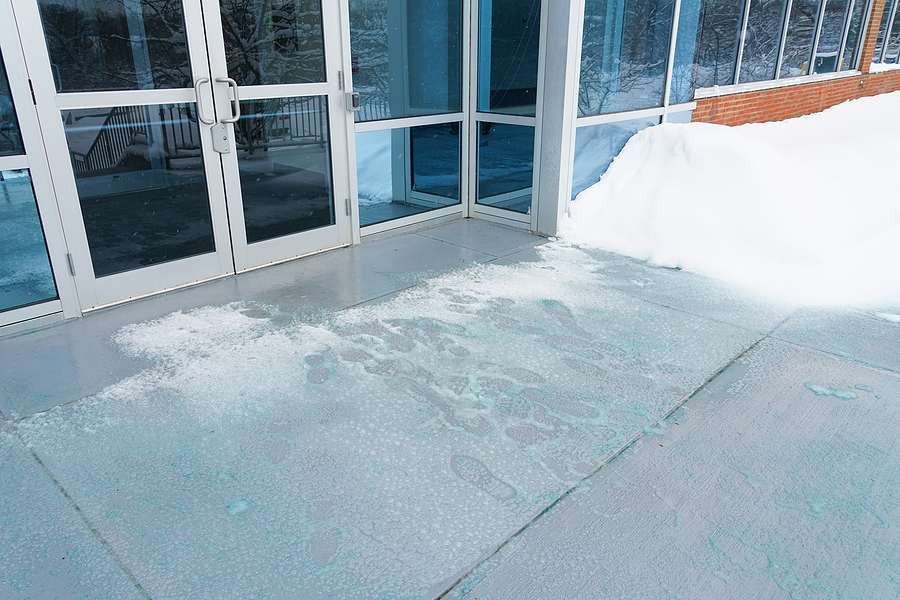
Along with the snow and freezing temperatures comes a unique wintery mix of materials that, if left untended, will wear down the look and durability of your building’s floors. These materials act like sandpaper grit; the more they get ground into the floors, the more damage they can cause over time.
- White salt residue
- Moisture from melting snow
- Dirt, road grit, and sand
- Faster wear in high foot traffic areas
- Increased slip risk near the entrance
Salt Erosion
The very thing that makes salt so effective at melting ice and making sidewalks traversable also makes it a real pain on commercial flooring. The chloride ions break down and react with the minerals in concrete, forming expanding crystals that will create cracks in your flooring. The salt crystals are also highly abrasive, rubbing back and forth on the flooring and corroding your concrete till it forms a dull finish.
Moisture Damage
As we go through the freeze/thaw cycle, melting ice and snow are inevitably going to be tracked into your commercial building. This moisture can seep into porous surfaces (like concrete), as well as cracks and seams along the floor. Letting this lie for prolonged time periods can cause serious problems. It can weaken adhesives, grow mold in the grout, and cause deeply unpleasant odors. If it’s allowed to remain, the freeze/thaw cycle will cause continued expansion of cracks and seams in your flooring.
Debris
Grit. Rocks, sand, salt crystals, and all the other little abrasive materials that stick to the bottom of your shoes in winter can wreak havoc on unprotected floors, especially in high-foot traffic areas. Over time, you will easily be able to identify where the heavy scuffs and scratches are that can make an otherwise professional business look shoddy.
Collective Residue
All of the chemicals and products used to make winter a little less oppressive can, unfortunately, cause their own set of problems. As the dirt and de-icers mix with remaining moisture tracked in, it can form into a nasty residue that will stubbornly wedge itself into the area. This accumulation will dull finishes, wear down grout, and make flooring feel sticky or gritty.
Protection and Defense

The good news is that there are steps you can take, both on a practical and professional level, that will help mitigate the damage. Utilize the following steps to help protect your flooring investment.
D.I.Y
Heavy Duty Mats: Heavy-duty floor mats at entrances will help by trapping water and salt before it gets tracked into the rest of the building. They will need to be cleaned and replaced on a fairly regular basis or their effectiveness will be lowered. This is especially true whenever there is heavy snowfall.
Spills and Moisture: Do not allow moisture to rest and seep in. If you see pools of water or if you can see where your flooring is damp, address it quickly. Cleaning up stills and getting rid of stagnant moisture can help reduce damage and prevent many of the previously mentioned winter issues.
Increase Cleaning: Pay attention to your high traffic areas for accumulations of salt, dirt, debris, and the like. The longer this grit is allowed to remain, the more it will get ground into your flooring. Getting this mess cleaned up can help cut down on the collective residue and erosion that such debris can cause.
Professional
Sealing: Depending upon your type of flooring, you may want to consider a professional sealing before winter begins. There are multiple options for concrete, hardwood, stone, and more. They all protect your floors from the ravages of wintry debris. A high-quality sealant also prolongs the amount of time between repairs.
Deep Cleaning: Deep cleaning aims to remove the ground-in materials from your flooring. A powerful vacuum is used to help clear out any loose debris from the surface, while a more intensive scrubbing pulls the grit from cracks and seams.
Polishing: If you notice your floors getting dull and scuffed, a good professional polish is the answer. This works best for stone and concrete, buffing out minor scratches and imperfections. Polishing restores the shine of a floor and helps close tiny, microscopic pores, which help maintain a floor’s integrity.
Maintenance: The best way to avoid damage and inconvenient problems is to have an ongoing maintenance plan with your flooring contractor. This means regular inspections for damage or wear and tear. Consistency is key, especially when it comes to promptly addressing any issues your contractor brings to your attention.
As the winter weather continues, Vanguard is here to see to your commercial flooring needs. We offer quality, high-grade commercial cleaning for many of Springfield, OH’s most in-demand businesses. Whether you’re looking for a green solution, disinfection processes, or maintenance, Vanguard is here to keep your floor safe and reliable.
6 Questions to Ask Before Hiring a Janitorial Service in Dayton or Columbus
When it comes to finding the right janitorial services for your business, we know it’s about much more than just cleaning up after the day is done. Janitors provide a wide variety of services to the average business owner, often going above and beyond to assist with maintenance issues, daily inspections, and reports. As a business owner, you put a lot of trust in your janitorial staff to remain professional and task-oriented. So let’s take a look at what you should know when you want to hire from a janitorial service.
What kind of janitorial services do you offer?

Not every company requires the same services. Nor do all janitorial companies offer the same variety. When looking for your company, you want to find a service that provides the kind of quality you need. You may want to know what kind of products and cleaning equipment they use, in case they are incompatible with your office equipment. Maybe you want a regular disinfectant clean to help keep your employees healthy as cold and flu season approaches. Does your company have a green initiative that it takes seriously? You may want a company that offers green solutions for your cleaning needs.
Is your company bonded and insured?
This should be a given in any professional cleaning industry. Bonded and insured businesses offer your business an extra layer of protection in case of any concerns or accidents. While freelance janitors are always an option, a certified company can offer you more thanks to the safety net in place. You may want to see proof of this, so be sure to ask for a Certificate of Liability and Worker’s Comp insurance for your records.
What kind of facilities do you currently work for?
A good company offers a variety of expertise, so you know the person working for you is highly knowledgeable. Some locations, such as hospitals or warehouses, may have high standards and specifications that must be followed for the safety and well-being of everyone. Other companies that deal with sensitive information, like a bank or car dealership, prioritize their clients’ privacy and need to know their janitors are trustworthy. A company with a good variety of clients comes with knowledge of how to professionally handle any job.
This is also a good opportunity to see if the company has experience in your industry.
How do you guarantee quality assurance?

Most professional cleaning companies perform a comprehensive review of themselves regularly to ensure they are keeping up with their clients’ needs. You may want to know more about how they train their staff, what they do in the case of special cleaning requests, and how they comply with industry regulations or emergencies. The biggest indication of quality will be examples of previous clients’ satisfaction, so don’t hesitate to ask for a case study.
What kind of services would you suggest for my company?
How you see your company is vital. How your janitorial service sees your company is just as important. This offers you the opportunity to see how your cleaning company breaks down its services. You can learn more about their attention to detail and where they would put the most focus. You can also discuss areas of concern and see how your janitors would handle this. A quality janitorial service will be happy to break down their plan for you and will look forward to knowing how they can better meet your company’s needs.
Do you offer customized cleaning plans?
Most janitorial services will have a standardized regimen they follow based on training, knowledge, and previous experience with handling similar companies. That being said, any high-quality janitorial service will want to make sure they meet your cleaning needs. Don’t hesitate to ask what additional services are offered and how they can better customize their services for your building.
Finding the right fit for your company can be a process. But the right fit means fewer concerns down the road. Vanguard offers tailored commercial cleaning services that exceed the current industry standard.
Why Commercial Cleaning Consistency Matters More Than Price
Facility managers often start their search for a cleaning partner by comparing quotes. That makes sense—budgets matter. But after a few months with a new vendor, the real question usually becomes something else: Why do I keep seeing new cleaners?
Consistency is one of the most overlooked factors in commercial cleaning, yet it has the biggest impact on trust, security, and long-term satisfaction.
The Real Cost of a Revolving Cleaning Crew
When cleaning teams change frequently, problems follow. Missed tasks, uneven quality, and repeated onboarding all add friction to a facility manager’s day. Over time, those issues cost more than the initial savings from a low bid.
High turnover also creates security concerns. After-hours cleaning requires trust. Seeing unfamiliar faces week after week makes it harder for property managers to feel confident about who has access to their building.
Why Facility Managers Care About Seeing the Same Faces
Consistency builds familiarity. Familiarity builds trust.
When the same cleaning professionals return night after night, they learn the building’s layout, traffic patterns, and expectations. They notice when something looks off. They work more efficiently because they know the space.
For facility managers, that reliability means fewer complaints, fewer follow-ups, and fewer surprises.
How Low Attrition Changes the Cleaning Experience
One of the strongest indicators of consistent service is attrition rate. A low attrition rate means cleaning professionals stay longer, take ownership of their work, and develop real relationships with the facilities they serve.
Consistency doesn’t just improve quality—it reduces risk. It limits the number of people cycling through your building and creates accountability that’s hard to achieve with constant turnover.
A Real Example of Consistency at Work
In Cincinnati’s Hyde Park neighborhood, one Vanguard-supported cleaning professional has serviced the same facility for years. The building team knows them by name. They understand the site’s routines, special requests, and seasonal needs.
That kind of continuity doesn’t happen by accident. It’s the result of supporting long-term cleaning relationships rather than treating labor as interchangeable.
Why the Lowest Bid Often Loses in the Long Run
Low-cost vendors often rely on frequent staffing changes to control expenses. On paper, the numbers look good. In practice, the service rarely feels stable.
Facility managers end up spending time managing issues that shouldn’t exist—tracking missed cleanings, addressing tenant complaints, and re-explaining expectations to new crews. Over time, that hidden cost outweighs the initial savings.
Consistency as a Risk-Reduction Strategy
Commercial cleaning consistency reduces more than headaches. It lowers security risks, improves cleanliness outcomes, and creates a more predictable operating environment.
For property managers and operations teams, consistency isn’t a luxury—it’s a form of risk management.
Choosing a Cleaning Partner You Can Rely On
When evaluating cleaning providers, asking the right questions matters. Instead of focusing only on price, it helps to ask:
- How often do cleaning crews change?
- What is the average tenure of cleaning professionals?
- How is consistency maintained across accounts?
The answers to those questions often reveal more than a quote ever could.
Consistency Builds Confidence
In commercial cleaning, trust is built over time. Seeing the same professionals, receiving the same quality, and knowing what to expect week after week creates confidence for facility managers and tenants alike.
If you’re questioning the consistency of your current cleaning service—or tired of seeing a revolving door of crews—Vanguard Cleaning Systems of Ohio helps facilities build long-term, reliable cleaning partnerships rooted in trust and continuity.
What Commercial Buildings Really Need from Floor Cleaning Services
Floors are one of the hardest-working surfaces in any commercial building. They absorb constant foot traffic, rolling equipment, spills, dirt, and seasonal debris — all while being expected to look professional and remain safe. Yet floor care is often treated as an afterthought instead of the long-term investment it truly is.
For facility managers and property teams, understanding how professional floor cleaning services support safety, appearance, and longevity can make a meaningful difference in both budgets and daily operations.
Why Floor Care Is an Investment, Not a Line Item
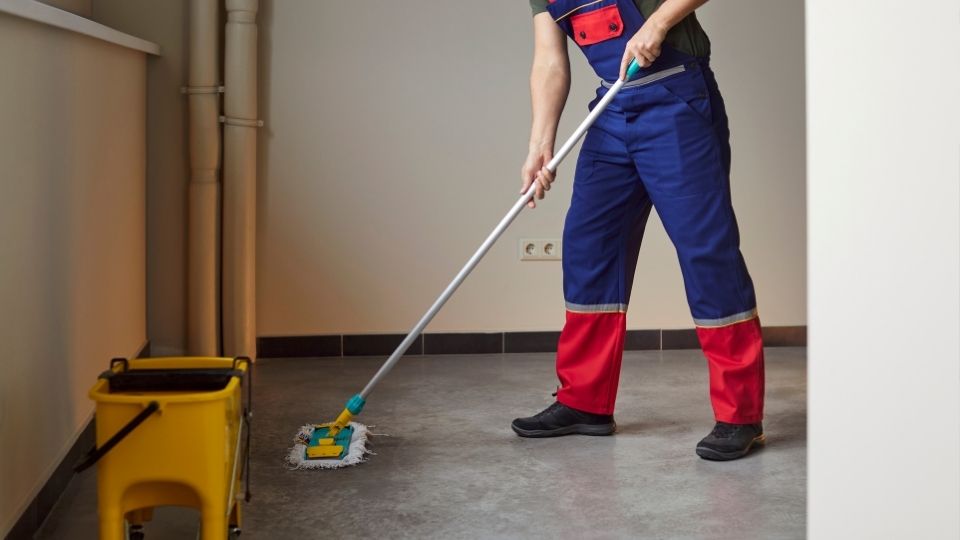
Ignoring floors doesn’t just affect how a building looks — it accelerates wear and creates safety risks. Scratched finishes, worn wax layers, and embedded dirt can shorten the lifespan of flooring materials and increase slip hazards.
Regular floor maintenance protects the original surface, reduces the need for premature replacement, and helps facilities stay compliant with safety standards. Over time, a consistent floor care program costs far less than major repairs or full floor replacement.
Understanding VCT and Hard Surface Floor Requirements
Many commercial buildings rely on VCT (vinyl composition tile) and other hard surface flooring because of durability and affordability. But these surfaces require specific care to perform well long-term.
VCT floors depend on proper stripping, waxing, and burnishing cycles to maintain their protective finish. Without routine maintenance, the surface dulls, stains more easily, and becomes harder to clean. Other hard surfaces — such as tile, concrete, or sealed stone — also benefit from specialized cleaning methods tailored to the material.
What Professional Floor Cleaning Services Include
Commercial floor care goes well beyond basic mopping. Depending on the facility and surface type, professional services may include:
• Stripping and waxing to remove worn finish and apply protective coatings
• Burnishing to restore shine and smoothness
• Deep scrubbing to remove embedded dirt and buildup
• Spot treatments for high-traffic or problem areas
• Ongoing janitorial floor services as part of a larger cleaning plan
These services work best when scheduled strategically rather than performed reactively.
Why a Floor Care Schedule Matters
A planned floor care schedule keeps surfaces looking consistent year-round and prevents damage from building up unnoticed. High-traffic areas may need more frequent attention, while lower-use spaces can follow a lighter maintenance cycle.
Seasonal factors also matter. Winter brings salt, grit, and moisture that can quickly break down floor finishes if not addressed properly. Scheduling deep cleaning during or after heavy winter months helps protect floors from long-term damage.
Scaling Floor Care Across Different Facilities
Not all buildings have the same needs. An office space, medical facility, warehouse, and school all experience different traffic patterns and wear.
Vanguard Cleaning Systems of Ohio supports floor cleaning services that scale across facility sizes and surface types. From small offices to large commercial buildings, floor care programs are adjusted to match real-world use — not generic assumptions.
Supporting Safety and Professional Appearance
Clean, well-maintained floors contribute to safer environments and stronger first impressions. They reduce slip risks, improve indoor appearance, and support a more professional atmosphere for employees, clients, and visitors alike.
For facility managers, floor care is one of the most visible indicators of building upkeep — and one of the easiest to overlook until problems arise.
Build a Smarter Floor Care Program
Commercial floors perform best when they’re maintained with intention, not just cleaned when they look worn. A proactive approach protects surfaces, controls costs, and supports safer facilities year-round.
Looking for reliable floor cleaning services for your commercial building in Ohio? Contact Vanguard Cleaning Systems of Ohio to discuss a customized floor care program designed around your facility’s needs.
Post-COVID Cleaning Costs: What Facility Managers Are Really Paying For
Commercial cleaning budgets look very different today than they did just a few years ago. Since COVID, expectations around cleanliness, consistency, and accountability have risen — while labor costs and operational pressures have increased across the board.
For facility managers, the question is no longer just “How much does cleaning cost?” but “What am I actually getting for that cost?”
Why Cleaning Costs Have Increased Since COVID
Several factors have reshaped commercial cleaning pricing in recent years. Labor costs have risen significantly, supply chains have shifted, and expectations for disinfection and hygiene are higher than ever.
At the same time, facilities are asking cleaning partners to do more — more consistency, more documentation, more reliability — often without expanding budgets. This tension has made pricing comparisons more complicated and, in many cases, misleading.
The Hidden Cost of the Lowest Bid
Many facility managers have experienced this firsthand: a low cleaning quote that looks great on paper but falls apart in practice. Missed services, inconsistent staffing, poor communication, and frequent crew turnover often follow.
What appears cheaper upfront can quickly become expensive when managers spend time chasing vendors, addressing complaints, or rebidding contracts. Price alone doesn’t account for operational disruption or reputational risk.
Why Inconsistency Drives Vendor Changes
Across onboarding conversations and weekly check-ins, Vanguard consistently hears the same two reasons clients switch cleaning vendors: price increases and inconsistent service.
Inconsistency is often the bigger issue. When crews change constantly or standards slip, even modest cost savings stop feeling worth it. Reliability — seeing the same people, receiving the same level of service, week after week — has become one of the most valuable aspects of a cleaning contract.
Reframing Cleaning as an ROI Decision
Cleaning isn’t just a line item — it’s an investment in your facility’s function and reputation. Consistent janitorial services reduce complaints, protect flooring and surfaces, support healthier work environments, and free facility teams from micromanaging vendors.
When evaluated through an ROI lens, value shows up in reduced turnover, fewer service escalations, longer-lasting finishes, and predictable operations.
What “Value” Looks Like in a Cleaning Contract
Post-COVID, value in commercial cleaning is defined less by scope lists and more by execution. Strong contracts include:
• Consistent staffing with low attrition
• Clear communication and oversight
• Reliable service schedules
• Scalable support as facility needs change
• Accountability through regular check-ins
These factors don’t always show up in a bid comparison — but they’re often what determine long-term satisfaction.
Why Facility Managers Are Rethinking Cost-Cutting
Budget pressure is real, especially in property management and commercial operations. But many managers are finding that aggressive cost-cutting leads to service gaps that cost more to fix later.
Post-COVID cleaning expectations haven’t disappeared. Occupants still notice cleanliness, and leadership teams still expect safe, professional environments. Cutting too deep can undermine both.
Making Smarter Cleaning Decisions Moving Forward
The most successful facility managers today focus on partners, not just providers. They look for cleaning services that deliver consistency, transparency, and measurable results — even if the initial quote isn’t the lowest.
That approach leads to fewer disruptions, stronger relationships, and better long-term cost control.
Finding the Right Balance Between Cost and Confidence
Post-COVID cleaning costs reflect a new reality — one where consistency matters as much as price. Evaluating cleaning services through the lens of value helps facilities protect their spaces, their people, and their reputation.
If you’re reassessing your cleaning costs or questioning whether your current service delivers real value, contact Vanguard Cleaning Systems of Ohio to talk through your facility’s needs and long-term goals.